
As a control valve and a temperature valve, when the temperature of the medium is lower than 0℃, a heater needs to be installed in front of the electric two-way valve to prevent the electric two-way valve from freezing and cracking;
If working in a heating system, it is best to install the electric two-way valve in the return water circuit, because the return water temperature is relatively low, and the service life of the washers in the electric two-way valve will be longer;
In order to ensure the reliability of the use of the electric two-way valve, it is recommended that the medium flowing through the valve be treated with water quality;
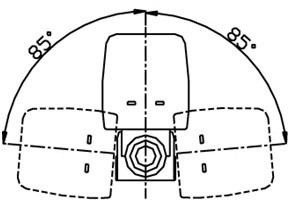
When the valve is installed in a horizontal pipe, the angle between the installation position and the vertical plane shall not exceed 85°;
When you toggle the manual operating lever, you should move it as slowly as possible. When the manual lever moves slowly along the arrow and presses into the gap to get stuck, the valve will be in a normally open state. Whenever current passes through the electric valve for the first time, the manual lever will be reset to Automatic position.
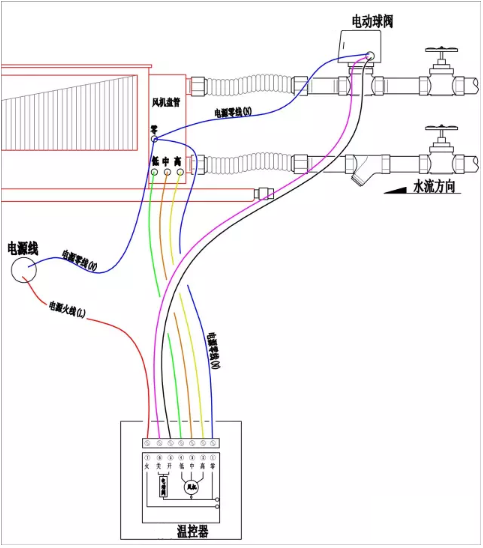
The red line is the 220V hot wire (L) directly connected to the hot wire interface of the thermostat;
The blue line is the zero line (N), and the coil pipe, two-way valve, and thermostat are connected in series;
Green, brown, yellow, and corresponding temperature controllers are connected to the high, medium and low levels of fan coil units respectively;
The black line in the figure is the "open" interface between the two-way valve's live wire and the thermostat;
The control line is a national standard line of 6 colors and 1.0 square meters.